Friday, March 22, 2013

Energía de España


Este semana yo conocí dos amigas de españa.  Los dos tienen doctorados y una estudiaba energía renovable en españa.  Yo la pregunté ella de la energía en españa y aprendia que la mayoria todavia es de combustíbles de petroleum y gases, y carbón es raro.  Pero ella dijo que tambien hay mucha energía de viento en españa, y a veces mas o menos seisento por cento de la energía en españa es de viento.  ¡Que chevere!  Hay energia hidroelectrica tambien.
                 
This week I met two postdocs from Spain.  One was studying renewable energy in Spain, so we got to talking about where energy comes from there.  Primarily the power plants use petroleum or gas, and carbon is rare.  Wind energy is apparently utilized well there though, and at times it’s possible to get up to 60% of the country’s energy from wind.  There is some hydroelectric power too.

Thursday, March 21, 2013

More on rural electrification


It might be interested to examine whether a simple small-scale wind turbine is sufficient for providing power to a small community and consider the costs of implementation.  The cost of a small 2.5 kW wind turbine could be about 3000 soles.  The alternatives include generators, solar panels, connecting the community to the electric grid, or remaining without electricity. 

Considering the last alternative listed first, for a family to remain without electricity, but want to have light to do things after dark, a family would pay around 1 to 2 soles per day for candles, leading to 30 to 60 soles per month.  In more or less one year, they would end up paying the same as for a wind turbine that could power lights for longer than these candles would last. 

Generators are quite popular for families and businesses in Peru without electricity.  These can cost about 500 soles per month to operate.  This means that after six months, the amount paid to operate a generator for that time could have been used on a turbine which would produce free energy after this time. 

We can also think about connecting communities without electricity to the national grid, however, for communities with only a few number of houses, this can be very costly per family, and be much more expensive than implementing a small wind turbine since these families typically do not need much power.

Solar panels are an option.  Some disadvantages to consider are maintenance (keeping them clean), and cost.  Bi-energy systems with solar and wind can be an excellent idea, especially if there is local support for both systems.

There is also always the question of how the technology for rural electrification is paid for.  Of course the families can pay if they are able to either by paying the money up front or a little at a time (and since they can currently pay for candles, the latter method is obviously feasible).  This is similar to how the stoves in Guatemala were sold by the company; they priced the stove with a payment plan that the families would not see any difference in what they were paying per month but would only see the difference in having a newer device.  And technologies that can be used to automatically meter and control the payments can help.  Another method is to obtain government money for electrifying rural communities.  This could be advantageous for politicians to support to get the support of communities, but the implementation of getting government funds to actually pay for the technologies can be difficult.  

Voy a escribir en español mas tarde.

Saturday, March 9, 2013

Teaching clean energy in Peru


We recently went down to Lima to fix a wind turbine at a school that has been installed there a few years ago.  We had to install new blades on an existing turbine body that was at the school, so we would not be able to balance the blades on the existing disc for the turbine, a step that is usually done inside the shop where there is no wind and we don’t have to be standing on a roof.  To make this step easier, we tried a new method for preparing the blades.  The original method included adding weight near the center to make sure all of the blades were of the same weight, and then adding weight to places on the disc as necessary to balance the blades.  In the new preparation, when adding weight to make all blades the same weight, the weight was added in strategic locations to make the center of mass of each blade in the same location.  We determined the center of mass by balancing the blades on a fulcrum along two separate lines.  To add weight, holes were drilled into the blades and the appropriate amount of lead was added before filling the holes up with resin.  This new method helped us balance the blades at the site in half a day!  This is a big improvement to the old method.

Nosotros fuimos a Lima para aregular una molina en una escuela que instaló hace pocas años y rompió.  Tenemos que instalar alaves nuevas en una molina que esta en la escuela.  Por esto, no podemos balancear las alaves adentro la fabrica donde no hay viento y no necesitamos estar arriba un techo.  Para majorar el paso de balancear, hicemos un metodo nuevo por la preperación.  En la metodo original, todos tres alaves son lo mismo peso, y si no balancean, ponemos mas peso donde necesita.  Pero in el metodo nuevo, ponemos peso in lugares especial en las alaves para hacer el centro de masa en lo mismo lugar en cada alave.  Encontramos el centro de masa por balanceando la alave, entonces poner mas peso por haciendo huecos y llenar con plomo antes de lenar los huecos con resin otra vez.  Esto metodo nuevo nos ayuda balancear las alaves a la escuela en solomente una media dia.  Mucho mejor de el metodo viejo.


The story behind the wind turbine at the school is also pretty interesting.  This wind turbine is at a secondary school that is called “the best secondary school in Peru, and possibly South America.”  The school has a book chosen as its community reading assignment, where everyone at the school reads the book and then the classes can have discussions about it.  A few years ago, the book chosen was The BoyWho Harnessed the Wind, about a boy in a remote African village who heard about wind energy and spent a lot of time reading old books and trying to build a wind turbine from metal scraps he could find.  A student at the school after reading this book then approached the science teacher and suggested that students learn to build wind turbines.  The teacher did just that in her classroom, and went a step further and they found WindAid who helped put a turbine in the school.  The turbine is now a beacon for clean energy.  The science teacher made and teaches an environmental science class and is promoting clean renewable energy as much as she can, her main motivation being that because this is the best school in Peru, she could be teaching the future presidents of Peru, so educating them about clean energy and showing them why it is beneficial can really help the policies that improve the lives of the Peruvians of tomorrow.  I thought this was an interesting story showing how literature, science, engineering, and policy are intertwined.

La historia de porque la escuela tiene una molino es interesante tambien.   La molina esta en una escuela secondaria que se llama “la mejor escuela en Peru, y posiblemente America del Sur.”  La escuela tiene un libro por la comunidad que todos leen y discutimos en las clases.  Haces unas años, el libro fue “El Niño que Empleó la Viento,” sobre un niño de un pueblo de Africa que leó muchas libros de ciencia y trató de contruir una molina con basura de metal.  Dispues de leyo esto libro, un estudiante en la escuela preguntó la maestra de ciencia puede ella enseñar la clase sobre molinas.  La maestra hizo esto, y tambien conosció a WindAid y todos podemos una molina en la escuela. La turbina es un simbolo de energía renovable.  La maestra hizo una clase de ciencia de el medio ambiente y quere favorecer energía limpia y renovable mucho porque esta es la mejor escuela en Peru y posiblemente hay estudiantes que seré presidentes en el futuro.  Entonces, es muy importante enseñarlos sobre energía limpia y mostrarlos como esta energía puede mejorar las vidas de la gente.  Yo pienso esta historia es una bien ejemplo que muestra como literatura, ciencia, ingeneria, y politica mezclan/.

Saturday, February 23, 2013

Reporte de la estufa investigación


Just like real scientific research, my analysis and report on the experiments I did for the rocket stove took several weeks to finish after performing the experiments.  In addition to the soot measurements, I also measured water boiling time and the temperature distribution of the stove. 

Como todas investigaciónes de ciencia, mi anailis y reporte de los experimentos de las estufas terminan algunas semanas despues de terminando los experimentos.  Ademas de examiné la hollín, medí el tiempo necessario hervir agua y la distribución de la temperatura en la estufa. 

                                                                                          
The water took the longest boil when the stove was started from a cold start.  When the water boiling test was repeated when the stove was lit when it was already hot, the same amount of water too half the time to boil.  Decreasing the time to boil to half again was possible by putting the pot inside the stove (see photo).  This is why many wood-burning stoves have pot skirts.

Agua necesitó mas tiempe hervir cuando la estufa encendió de una frio tiempo.  Menos tiempo necesitó cuando la estufa encendió cuando ya estaba caliente (un medio de la otra tiempo encendió de la frio estufa).  Es posible reducir el tiempo necisario hervir a medio otra ves si pone el olla adentro la estufa (mira la foto).  Esto es la razon que muchas estufas de leñs tienen faldas de ollas.


The different temperatures of the surface of the stove were studied with an infrared temperature sensor, and also with a much more real world test of tortilla making.  When putting enough wood in the stove to get the rear burners to sufficient cooking temperature, the front burner will burn the tortillas very quickly.  But the rear burners of the stove are not hot enough for cooking tortillas when the front burner was set to the ideal heat for not burning the tortillas (by using less wood).  I did find a great way to make use of the rear burners when the front burner was at low heat; when open, the rear burners were perfect for roasting marshmallows and making s’mores.

Estudié la distribución de la temperatura en la plancha usando una herrmienta de temperatura como infraroja, y tambien hice un otra experimento mas real para hiciendo tortillas.  Cuando puse suficiente leña en la estufa para hacer la plancha altras suficiente caliente, la fronte de la plancha es demaciado caliente y las quemaré las tortillas muy rapido.  Pero cuando la fronte de la plancha puede cocinar tortillas bien como menos leña, la plancha altras falta suficiente calor y no puede cocinar.  Yo encontré una bien opción por la plancha altras cuando la fronte de la plancha puede cocinar tortillas bien; la plancha altras esta perfecto para hacer angelitos asado (o malvaviscos tostados) y u’p’mas**.


** s’mores = some more = un poco mas = u’p’mas

This stove study was on the stove designed by Alterna.  The other stoves I worked on with my Spanish school in Guatemala are discussed in their blog, including a post on our talk about soot!  

In Peru, I haven’t seen many cookstoves.  In communities near the ocean where ceviche is common, cooking isn't necessary for this dish.  Gas is also very cheap in Peru, so many families use gas stoves.  I did see some three-stone fire pits for making chicha morada in one of the electricity-free houses.  And we did build a campfire at a lagoon in the desert that would have been perfect for making s’mores and roasting fish.


Friday, February 22, 2013

Field installations


Many communities in Sechura, Peru are without electricity, at least not connected to the main grid.  We recently took a trip out there to install and maintain wind turbines for some of these communities.  Here are some short summaries, more to come later.  (Hay muchas comunidades en Sechura Peru que no tienen luz de la principal luz fuente.  Viajamos a las comunidades a instalar y arregular molinos por algunas comunidades.  Aqui yo escribo un poco sobre esta viaje, y mas a venir pronto.)

A small group of about five houses got a new wind turbine last week that we put up.  This was supposed to be the site for a pilot test of a new method to fund the wind turbines.  A meter was planned to be installed on each house that was connected to the generator, and this meter would be capable of measuring and controlling the amount of energy coming through to the house.  After a month of letting the community use the energy from the turbine for free, they would switch to having to pay a fee for the energy they use, which would eventually pay off the cost of the wind turbine, and any future excess would go back into the community for maintenance or a new turbine.  Though, based on the remote location of this community, it was not actually chosen for the pilot test of this meter technology.


Playa Blanca, a community of 49 houses near in Sechura was chosen to be the final location for the pilot test of this meter technology.  The people in this community were very excited to get a new wind turbine, and they were interested in being able to pay for the energy, therefore, this meter technology would facilitate the payment logistics.  And the meter would help ensure that families only paid for what they needed and/or could afford, and the cost could be chosen to be an improvement for the alternatives.  For examples, families who currently only needed light in the evenings could be paying less to get enough electricity to turn on an LED for several hours a night than to buy one or two candles a night (1 sole each).  Or a family who is accustomed to having electricity for a television, from a diesel generator, could be paying less for the energy from a wind turbine than to operate their generator.  Playa Blanca also has some of the best wind resources in the world, according to NASA data, so this is an excellent place to put in small scale wind turbines for the communities here.  The closest city connected to the main electricity grid is 40 kilometers away, and it is actually more cost effective to put in small scale wind turbines than to connect this community to the grid. 


We also visited a house that had already arranged to purchase a wind turbine.  His wind turbine was installed, and he was making payments of about 500 soles per month, collected in person.  This works well because the owner is very interested in making payments for his wind turbine, and WindAid is willing to come by and collect money on a regular basis.  However, this model runs into problems if either of these situations is not present, and this would be where the meter type of system would be of great help.  Many Peruvians seems to want to pay for electricity.  Before having wind turbines, many already have televisions or other electricity-powered appliances run on generators, which are expensive to operate, or batteries, which are expensive in time and money to get recharged in the nearest town.  This guy with the wind turbine loves his television and was excited to show it off to us.


We stopped by another small roadside restaurant off of the Pan American highway (forgot to take a photo).  The owner sold us some cold drinks, and mentioned how she was paying 500 soles a month to operate her diesel generator for the lights in her restaurant.  She saw our wind turbine propaganda (hats, stickers on the car, etc.) and was very interested in the product.  She could easily switch to paying 500 soles per month as a payment for a turbine and then never have to pay it again once the cost of the turbine (about 3000 soles) was paid off.

Monday, February 18, 2013

La finca de café


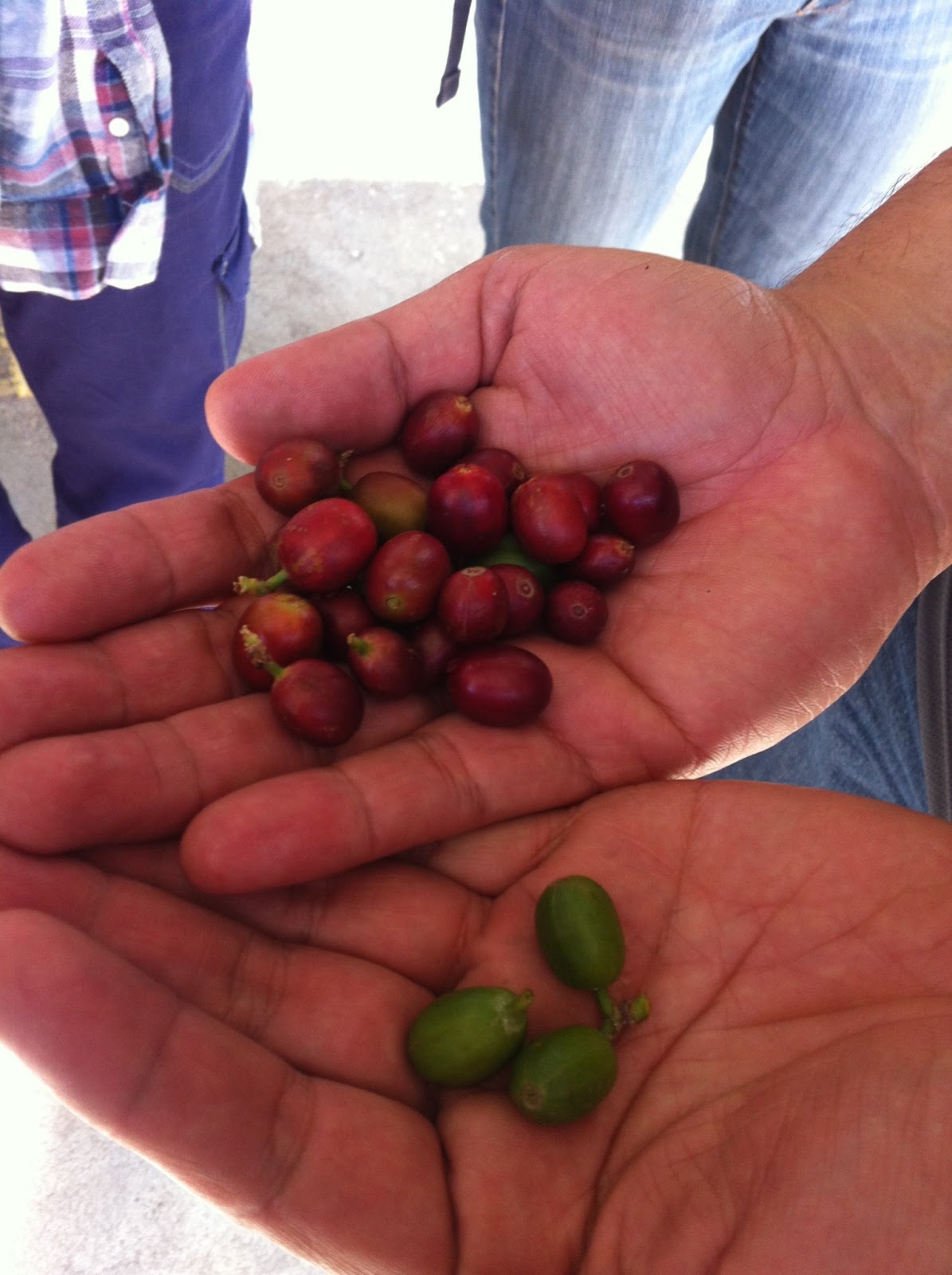
Here’s an overdue story about a trip to a coffee plantation led by my Spanish school in Xela.  We learned about the coffee making process, involving stuff about heat transfer.  First, we learned about differences between red and green coffee beans.  The red ones can be peeled and opened, and the green ones cannot, meaning that they have to be processed as is.  The green ones are usually the ones that get dried and made into instant coffee.

Hace algunas semanas, mi escuela de español en Xela fue a una viaje de la finca de café.  Nosotros aprendemos como preparar café y cosas en esto proceso sobre transferencia de calor.  Primera, aprendemos que es la diferencia de cafés rojos y verdes.  Podemos abrar los cafés rojos, pero no podemos abrar los cafés verdes.  Los cafés verdes necesitan preparar como fueron y a menudo estos es lo que cambiar a café instante. 


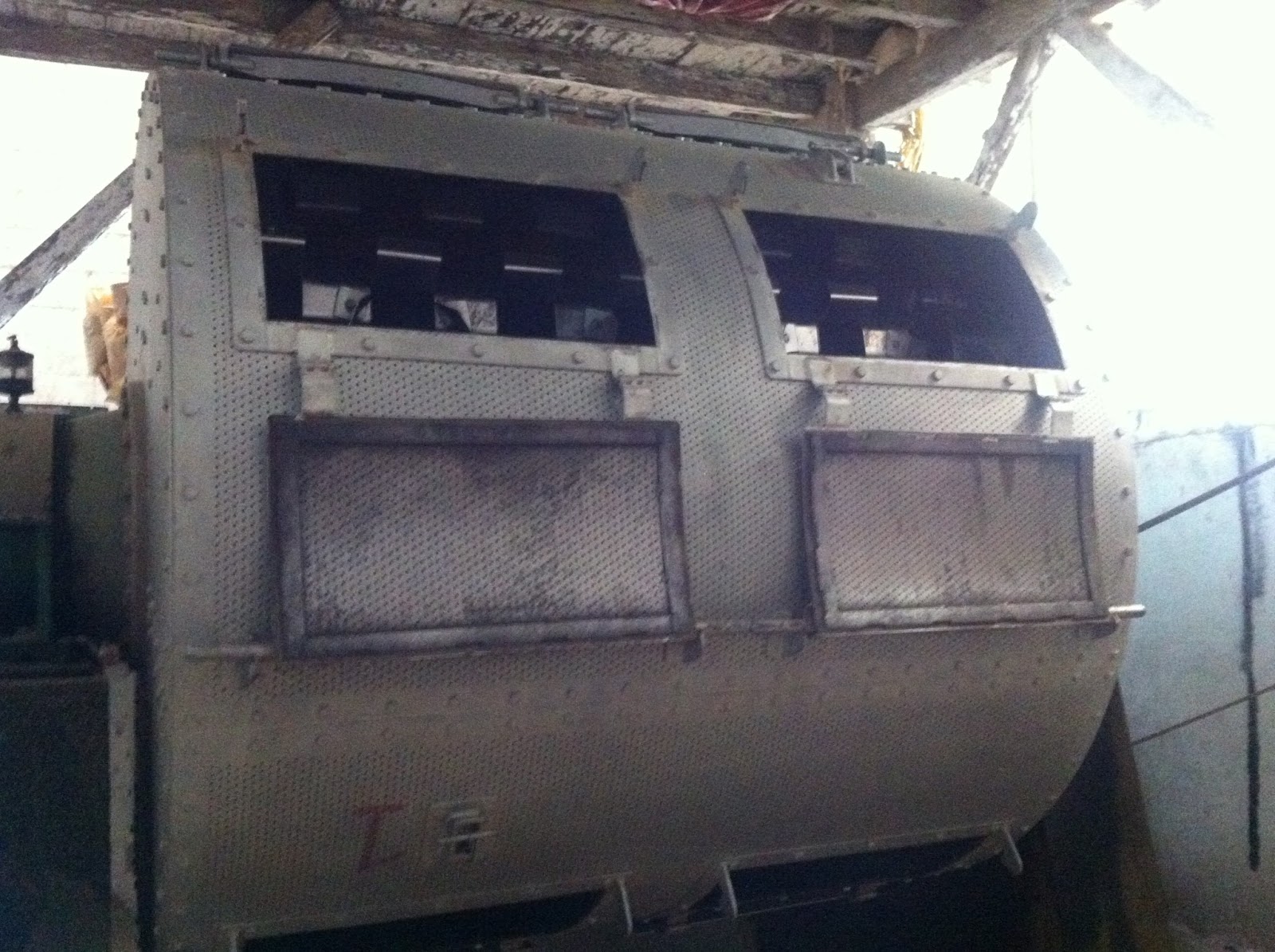
We saw three different methods of drying the coffee beans.  One is a machine from Germany (photo below left), where the coffee spins in circles while heat is allowed into the system.  Another method involves putting the coffee beans in a large pile above a grate where heat comes in through the bottom, and workers crawl through the mixture to distribute the heat and let the moisture evaporate through the top.  The last method is to let the coffee beans dry outside (photo below right), though if there is any chance of rain overnight these must be collected every night and put back out.  The machine from Germany is obviously the best method because it dried the coffee fast, within hours, and requires minimal input.  The method with the workers mixing the coffee is bad for the workers’ health, and they are always sick when working in this process.  The coffee drying outside takes days.  I asked why they don’t just build another machine like the German one.  My teacher said he wasn’t sure but it could be that the plantation owners don’t want to invest in one and take away jobs for the workers. 

Vemos tres opciónes para secar los cafés.  La primera opción es una máquina de Alemania (foto abajo a la izquerda).  Los cafés dan vueltas mientras calor entra la máquina.  La segunda opción es una caja donde calor entra en el piso de la caja, y trabajadores caminan en los cafés para mezclar.  La ultima opción es solamente poner los cafés afuera para secar (foto abajo a la derecha), pero si hay lluvia necesitan mover los cafés para que los no son mojados.  La máquina de Alemania es mejor porque los cafés secan mas rapido de las otra opciónes y no necesita mas trabajo.  La segunda opción (como la caja) es muy mal por la salud de los trabajadores y ellos siempre estan enferma.  La ultima opción (los cafés afuera) es muy lento.  Yo pregunté ‘¿porque ellos no construyen una otra máquina de Alemania?’   Mi maestro respondó ‘es una buen pregunta’ y el dijo posiblemente porque los dueños no lo queren y quieren trabajos por mas personas.


The final dried coffee beans of the best quality are the whitest ones, as shown below.  Almost all of the good coffee coming from Guatemalan coffee plantations are exported. 

La ultima paso de los cafés mejores es en la foto abajo donde son muy blancos.  La mayoria de los cafés mejores venden en otra paises.


Monday, February 4, 2013

Technology distribution models

It was interesting to learn about the different distribution models for the stoves in Guatemala.  Recall that the Spanish school developed a very cheap and easy safe stove that could be provided to families for little to no cost.  The company I volunteered with had a different model, of selling the stove to families, and any family could purchase one, and while the costs were on the higher end, the families could pay in payment plans where each month their fee was estimated to be equal to the amount that they would typically pay for extra wood for a non-fuel-efficient stove.

Es muy interesante aprender sobre las diferente modelos de distribución por las estufas en Guatemala.  La estufa de la escuela tenía una deseño por la estufas que es muy barrato y facil.  Entonces las familias podían recebir las estufas por menos o nada cuesta.  Las estufas de la compania distribieron con un otra modelo.  La compania vendía estas estufas a alguien familia.  La cuesta era mas de un tradicional estufa, pero las familias podía pagar un poco cada mes, y la cuesta por una mes es la misma de la cuesta por la leña por un estufa tradiciónal. 

Neither of these models are better.  They each have tradeoffs and serve different markets, and having both types of models helped ensure a larger population of Guatemalans with safe stoves.  Sustainable distribution models for safe stoves, and other types of technologies for improving quality of life in rural areas, are sometime more difficult that the engineering of the technologies, though often these concepts are intertwined. 

No modelo es major.  Cada modelo tiene un diferent propósito y cada modelo tiene intercambios.  Mas modelos es mejor por los Guatemaltecos porque mas familias reciben estufas.  Modelos de distribución que son sostenible de estufas y otra tipos de tecnologia es una problema y a menudo haciendo un bien modelo es mas dificil que la deseño de ingenieria, pero ambos son conectado. 

When I was talking with my Spanish teacher in Guatemala about energy in his country, I asked about why wind and solar energy was so rare.  His answer was that these technologies are very expensive. 

Cuando yo hablaba con my maestro de español sobre energía en Guatemala, lo pregunté porque no hay mucho energía de viento y sol.  La repuesta era que estes tecnologias son muy caro. 

WindAid, the organization in Peru that I am currently working with, has come up with several models for distributing wind energy to communities without power.  WindAid has a basic volunteer program that includes training in manufacturing their wind turbines, and almost half of the volunteer fees goes to pay for a wind turbines for a home or community area without power in Peru, and the people without power get these wind turbines at no charge.  During my first week in Peru, I helped install one of these 500 W wind turbines at a beach restaurant in Sichura, Peru


This restaurant was in a beach area that is popular with the locals, and before the turbine was installed, this restaurant and all others in the vicinity had to rely on batteries to use lights, radios, etc.  The wind turbine will now allow the owner to keep his restaurant open later at night with music and lights. 

This type of social entrepreneurship where volunteers provide much of the funds for these technology projects has the potential to work well on a small scale.  But WindAid has also come up with other methods to get wind turbines out to communities who need power.  This beach restaurant was chosen to receive a wind turbine in part, I think, because it would be a great spot for publicity of the organization and their wind turbines.  We posted fliers explaining wind energy at the restaurant, and we did indeed get a lot of curious beach goers come by and ask questions about it.  The flyers encouraged people to contact WindAid, and I assume will lead to more purchases of wind turbines, more communities inquiring about obtaining a turbine, and hopefully more financial support into the program. 


WindAid does also sell wind turbines, so clean energy (energía limpia) can go out to more locations.  Furthermore, the organization is also working with another organization to provide the wind turbines for free, and then after the community uses it for a month or so to see how it can help improve the quality of life by enabling children to study after dark, people to charge cell phones, etc. a device will be installed to charge the users for each kW-hr they use at a very low cost.  They theory is that after enough time, the cost of the wind turbine will be paid for, and thus this becomes a sustainable distribution system of wind turbines.